
Risk Management in Practice eLearning
Overview
This eLearning module provides a comprehensive introduction to risk management in financial services.
It outlines key concepts and provides an overview of the principal techniques used to identify, assess and manage risk exposure. It also provides a concise and accessible introduction to the subject, and serves as a refresher for more experienced practitioners.
This module includes videos and interactive exercises to reinforce the learning and enhance learner engagement.
Course Details
Introduction
- Why is risk management important?
- Financial and non-financial risks
- What is operational risk?
Culture, risk appetite and risk ownership
- What is risk culture?
- Indicators of a strong and weak risk culture
- How does a firm’s risk appetite feed into its response to risk?
- Who owns risk in an organisation, and what is the impact of the three lines of defence model?
The risk management process
- Risk identification - understanding the key categories of operational risk
- Risk assessment - the impact/probability assessment and the concepts of inherent/residual risk
- Risk mitigation – the importance of risk mitigation controls (e.g. preventative, detective and corrective)
- Risk monitoring & reporting – key tools to monitor risks (e.g. KPIs) and report them within an organisation
Dealing with risk incidents
- What is a risk incident?
- Understanding risk events and near misses
- Dealing with risk incidents
- Related controls – business continuity management and operational resilience
Putting it into practice
- Case Study 1 – who is responsible for managing risk?
- Case Study 2 – the importance of speaking up
- Case Study 3 – transparency about risks
Duration & Assessment
The course takes approximately 30 minutes to complete. It is followed by a short online assessment, which learners must pass to register completion.
Delivery
Our interactive learning is delivered online, so all you need is an internet-connected device – we’ll do the rest.
We handle every part of the set-up process, from customising your individual Learning Management System (LMS), loading staff data, setting up a deployment and reminder schedule and reporting on progress.
In addition, administrators can also have access to all of these tools too, giving you the flexibility to be involved as much or as little as you prefer.
eLearning Previews
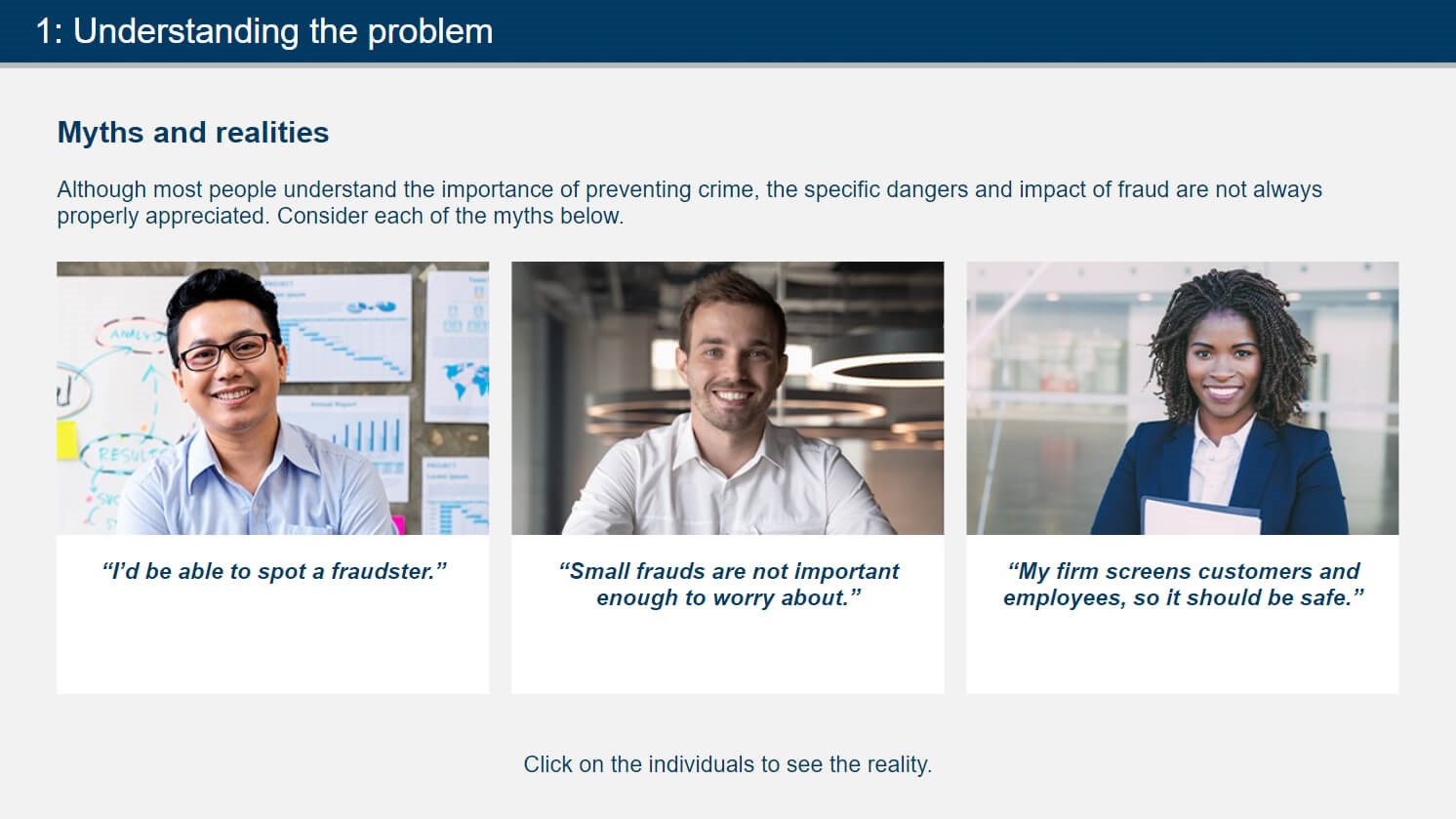
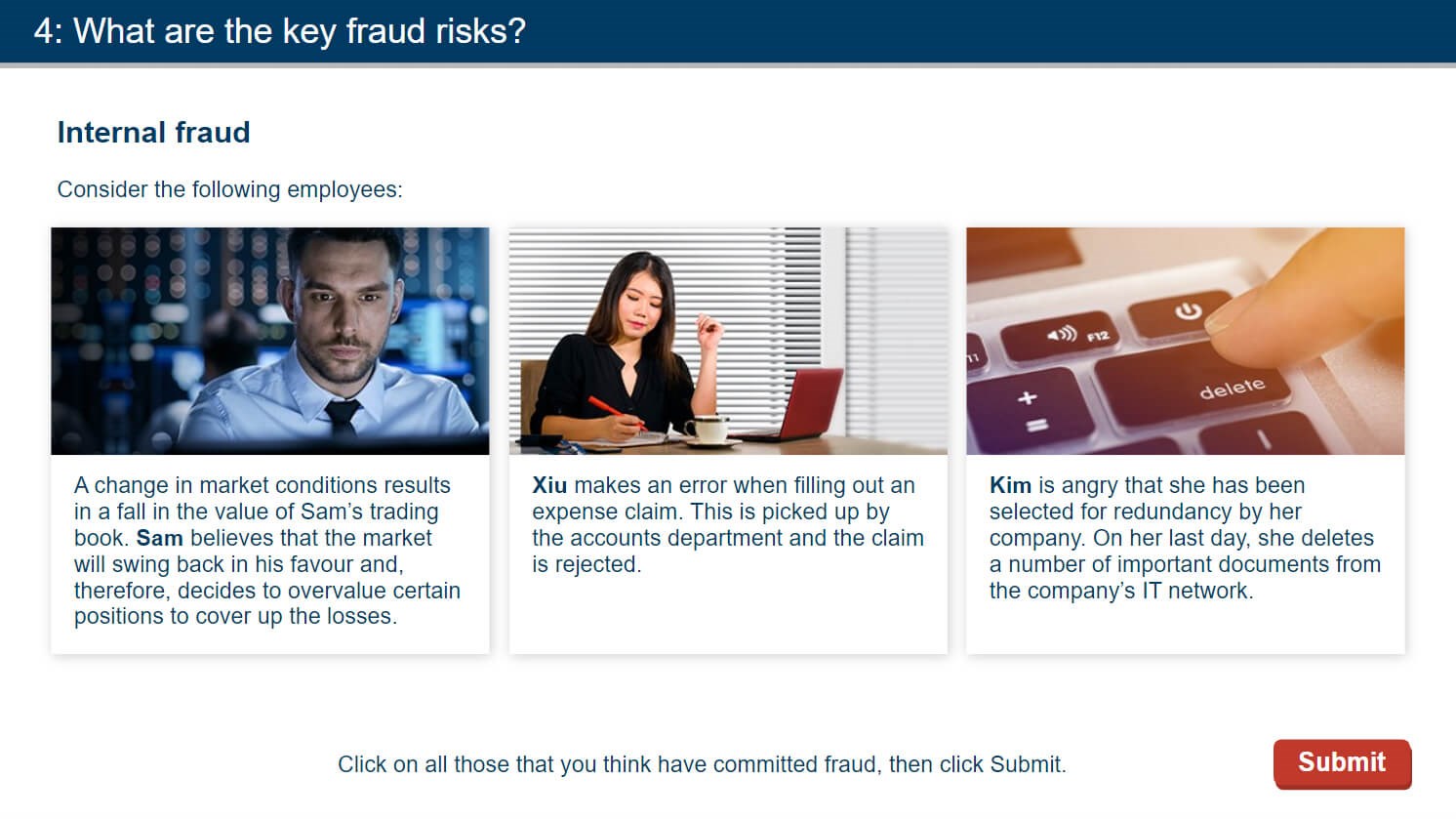
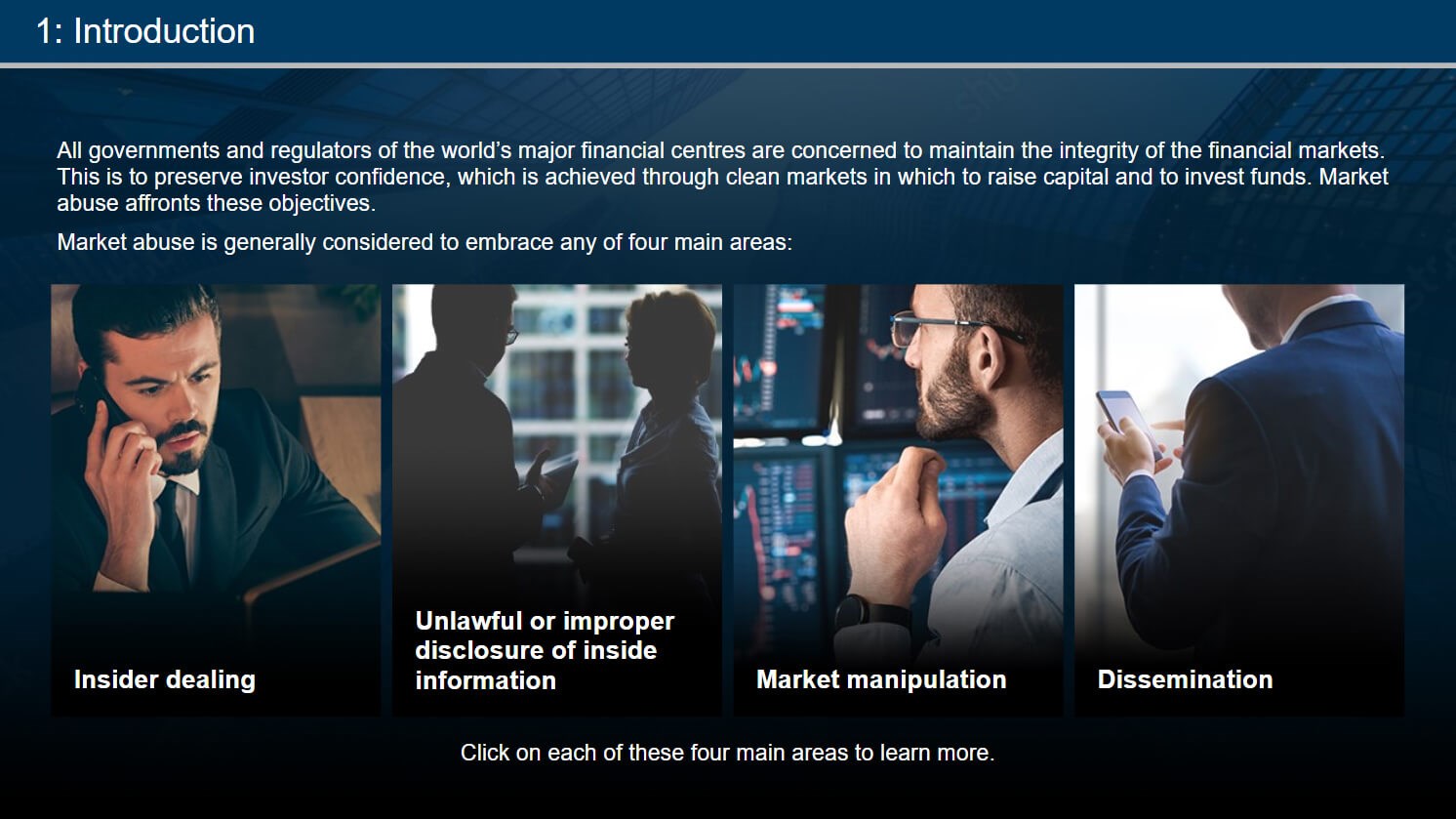
See examples taken from a range of our eLearning courses in the gallery below.





Get in touch to book a demonstration or to request a quote
